This valley enchants with its dolomitic landscapes, star cuisine and Ladin culture which makes everything even more authentic.
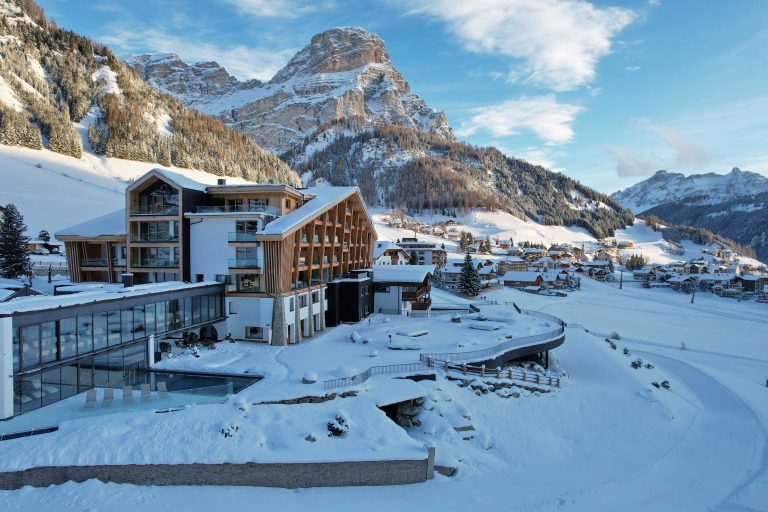
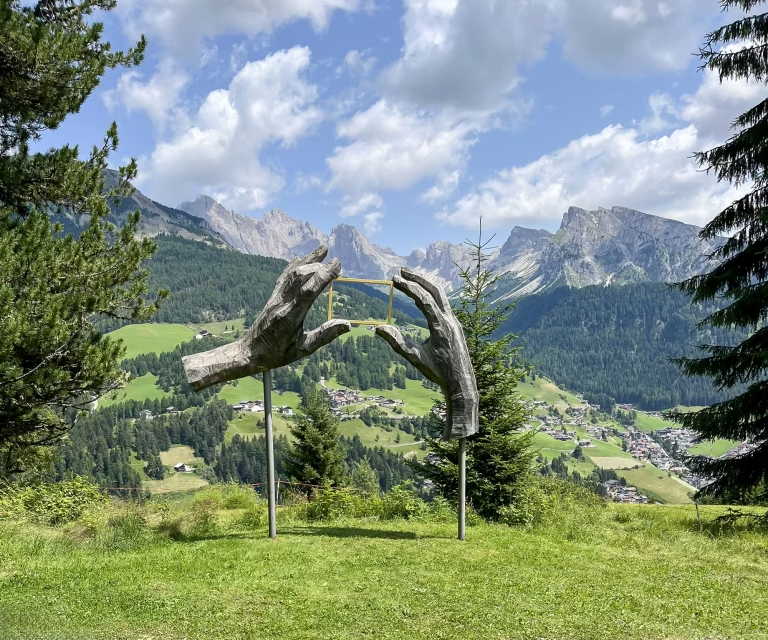
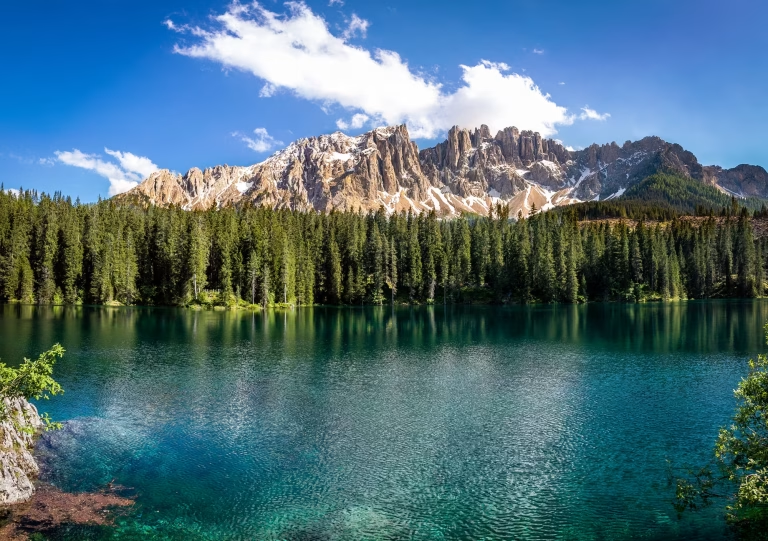
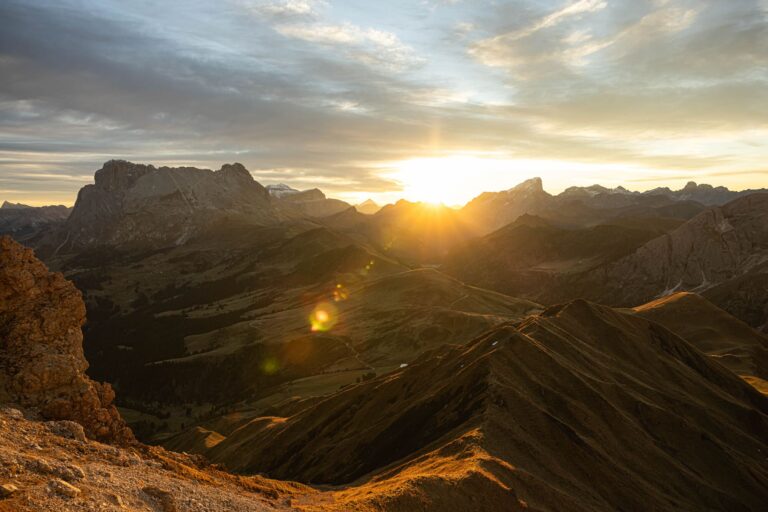
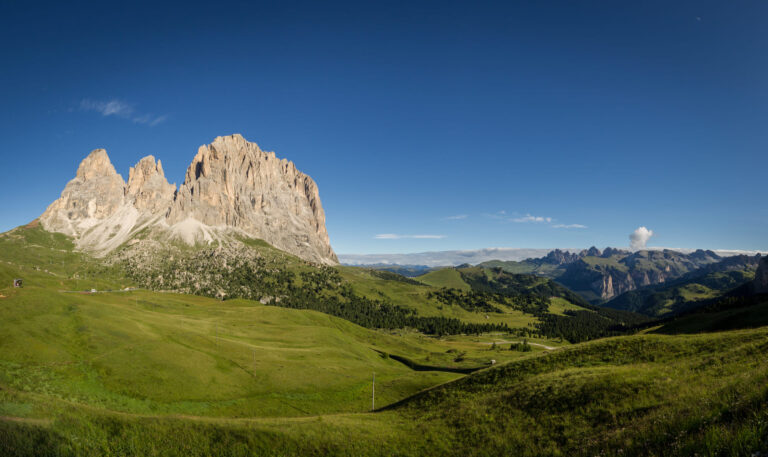
The Val Badia is a long valley in South Tyrol that stretches from Brunico (north) to the Dolomite passes of Gardena and Campolongo (south), where it opens onto the majestic Alta Badia. Among the most impressive peaks stands out the Sella Group, with the Piz Boè (3,152 m) and the spectacular Val Mezdì, ideal for freeride; Sassongher (2,665 m) dominates Corvara, while Lavarela (3,055 m) and Conturines (3,064 m) oversees San Cassiano; iconic is also the Sasso di Santa Croce (2,907 m), which gives the enchanting phenomenon of enrosadira at sunset.

The Val Badia is a long valley in South Tyrol that stretches from Brunico (north) to the Dolomite passes of Gardena and Campolongo (south), where it opens onto the majestic Alta Badia. Among the most impressive peaks stands out the Sella Group, with the Piz Boè (3,152 m) and the spectacular Val Mezdì, ideal for freeride; Sassongher (2,665 m) dominates Corvara, while Lavarela (3,055 m) and Conturines (3,064 m) oversees San Cassiano; iconic is also the Sasso di Santa Croce (2,907 m), which gives the enchanting phenomenon of enrosadira at sunset.

Val Badia is easily accessible from different directions:
By car, the most convenient access is from the A22 Autostrada del Brennero, leaving at Bressanone-Val Pusteria, continuing on the SS49 until San Lorenzo di Sebato and then on the SS244 to Corvara and the other towns of the valley. From Bolzano the journey takes about 1 hour and 30 minutes, while from Trento about 2 hours and 30 minutes.
The bus line 460 of Südtirol Mobil connects Brunico with Alta Badia. Those travelling by train can reach Brunico from Bolzano or Trento, then continue with the bus. In the tourist season there are active transfer services from the airports of Bolzano, Verona, Venice and Innsbruck.
The Val Badia is divided into two main areas, each with unique characteristics and landscapes. Geographically, the Bassa Badia includes the villages of San Martino in Badia and San Vigilio di Marebbe; Alta Badia, on the other hand, represents the highest and most touristic part of the valley, with famous towns such as Corvara, Colfosco, La Villa, San Cassiano, Badia and La Val.
Everywhere the Ladin cultural identity is strong, a heritage that has its roots in a thousand-year history. Ladin, the Romany language spoken by about 30,000 people in the Dolomites region, is recognised as one of the three official languages of South Tyrol, alongside Italian and German.
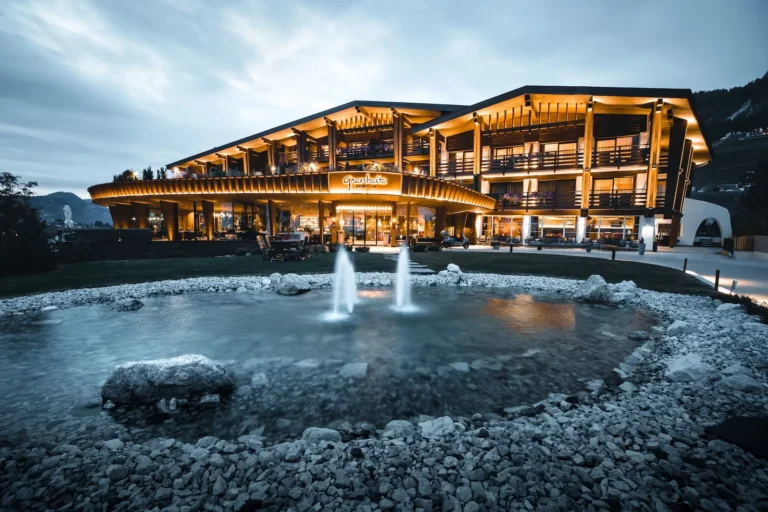
San Cassiano is one of the most exclusive resorts in Alta Badia, a small, elegant, and refined village located at 1,537 meters above sea level. Surrounded by the Dolomites, it is the ideal starting point for spectacular excursions, such as that to the Lagazuoi, a mountain rich in history linked to the First World War. In winter, its slopes are part of the Dolomiti Superski area, with direct access to the Sellaronda. San Cassiano is also a gourmet destination: here you will find the restaurant St. Hubertus, awarded 3 Michelin stars.


Considered the “capital” of Alta Badia, Corvara is the most famous resort in the valley, located at 1,568 meters at the foot of the Sassongher. It is the beating heart of winter and summer tourism, with direct links to the Sellaronda and a wide range of hotels, restaurants and shops. In summer, the most popular hikes include the trail to Lake Boé and the Sella Group’s via ferratas.
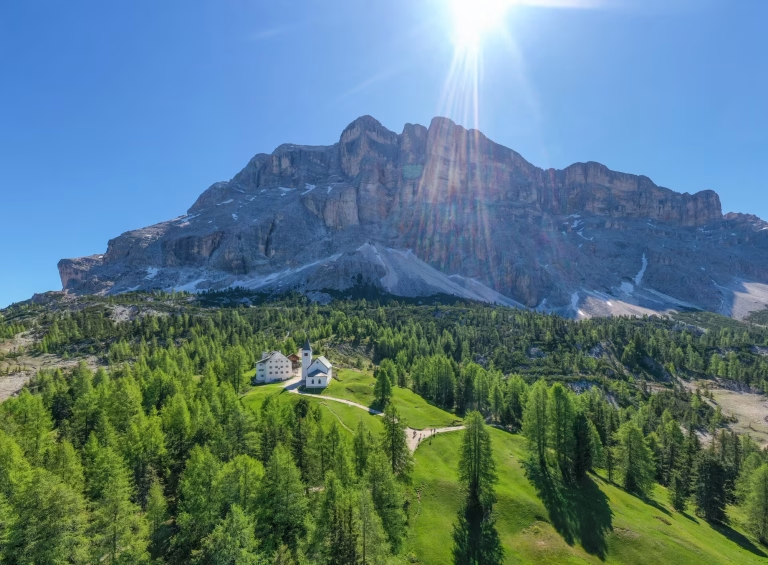
La Val is a hidden gem of tranquility in Alta Badia, with the beautiful church of Santa Barbara that rises on a promontory. The town is known for its meadows of the Armentara, a natural area of extraordinary beauty at the foot of the Sasso di Santa Croce. La Val is also the first certified hiking village in South Tyrol, with trekking routes suitable for everyone, from families to more experienced hikers.
Badia is a country rich in history and spirituality, with its many hamlets. In Oies is the birthplace of Saint Joseph Freinademetz, the first missionary saint from South Tyrol, today a pilgrimage destination. San Leonardo in Badia, with its picturesque church and old town, is the starting point for exploring the Fanes-Senes-Braies Nature Park.
In San Martino in Badia there is the Museum Ladin Ciastel de Tor, dedicated to the culture and history of the Ladin people, a must for those who want to know better the roots of this region. The Villa, on the other hand, is famous for the Gran Risa, one of the most iconic slopes of the Alpine Ski World Cup. During the summer, a must-see event is the Hike & Jazz Festival, which combines jazz music and trekking in the Dolomites.
Longiarù, a hamlet of San Martino in Badia, is an authentic and unspoilt corner away from mass tourism. Here you will find the picturesque Val di Morins, a path that crosses an ancient area of water mills, some still working.
Brunico is the main center of the Val Pusteria and represents the access point to the Val Badia. This charming town combines history and modernity with its medieval castle, the streets full of boutiques and cafes, and the Messner Mountain Museum Ripa, dedicated to mountain cultures from all over the world. It is also the gateway to the Plan de Corones, one of the most important ski areas in South Tyrol.
Colfosco is the highest village in Alta Badia, located at 1,645 meters, at the foot of the Sella Group and the Puez-Odle Nature Park. This small village is the ideal destination for mountain lovers: in summer it offers panoramic excursions to the Vallunga and the famous Ferrata Tridentina, while in winter it is perfectly connected to the Sellaronda.
San Vigilio di Marebbe is the gateway to the Fanes-Senes-Braies Nature Park, one of the most spectacular protected areas in the Dolomites. Located at 1,201 meters, the village is a perfect destination both in summer and winter, with its slopes in the area of Plan de Corones and its trails leading to iconic places such as Lake Braies and the Ciastlins waterfalls. A few kilometers away, the small village of Rina di Marebbe offers an authentic and quiet atmosphere, far from the most crowded tourist circuits.


Summer in Alta Badia and Val Badia is a perfect balance between adventure, sport and relaxation, immersed in one of the most spectacular sceneries of the Dolomites. Those looking for panoramas to photograph can climb the Piz La Ila (accessible by cable car from La Villa) or the Santa Croce – La Crusc chairlift that leads to the suggestive Sanctuary of Santa Croce, starting point for spectacular excursions among the Armentara meadows. For golf lovers, the Alta Badia Golf Club at 1,700 meters offers a unique experience among the peaks.
Hikers will find routes for every level, from baby trekking on the gentle trails of the Tru di Lersc and Lake Lech de Sompunt, to the most adrenaline-pumping via ferrata such as the Tridentina ferrata at Pisciadù and the Piz da Lech, perfect for those who love climbing. For a journey into history, the Valley of the Mills in Longiarù allows you to discover ancient water mills still working.
E-bike enthusiasts can explore the scenic trails between Passo delle Erbe, Prati dell’Armentara and the Sellaronda MTB Tour, one of the most exciting routes in the Dolomites. There are many huts in the area for a relaxing break: La Marmotta among alpine pastures, the Ütia Bioch with views of the Sella Group and the Kostner Hut under the Piz Boè; the Jimm Hut and the Edelweiss Hut at Colfosco, the Gardenaccia above the Villa.
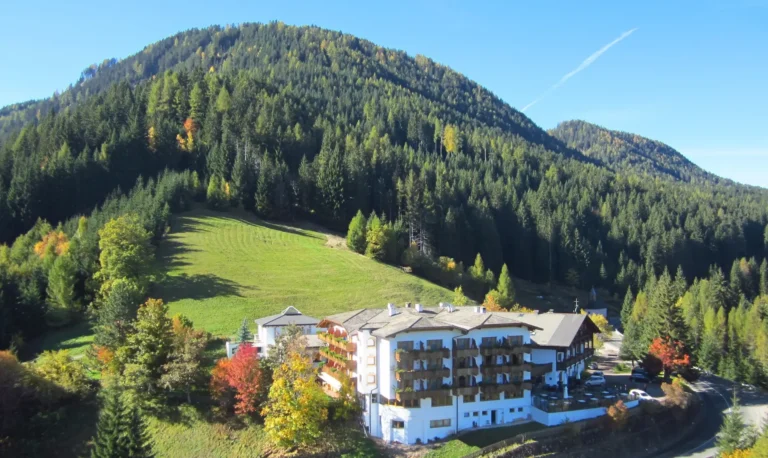
Autumn in Alta Badia is a riot of colors, with the woods that are tinged with warm shades and a quieter atmosphere. At sunset, you can spot deer and chamois in the trees, while the cool days invite you to taste local specialties such as krapfen, barley soup and alpine cheeses.
In November do not miss the Rait de San Linert – Leonardiritt (Ride of San Leonardo), the evocative horse parade in Badia that celebrates San Leonardo, patron of animals.


Alta Badia and Val Badia offer a complete winter experience between skiing, outdoor activities and alpine traditions. Their ski area is part of the Dolomiti Superski, with 130 km of slopes and direct access to the Sellaronda Quattro Passi, one of the most spectacular ski routes. Not to be missed is the Gran Risa, stage of the Alpine Skiing World Cup, and the Nordic Ski trails immersed in nature. For beginners and families, the Piccolino Val Badia and the baby camps offer safe areas to learn how to ski.
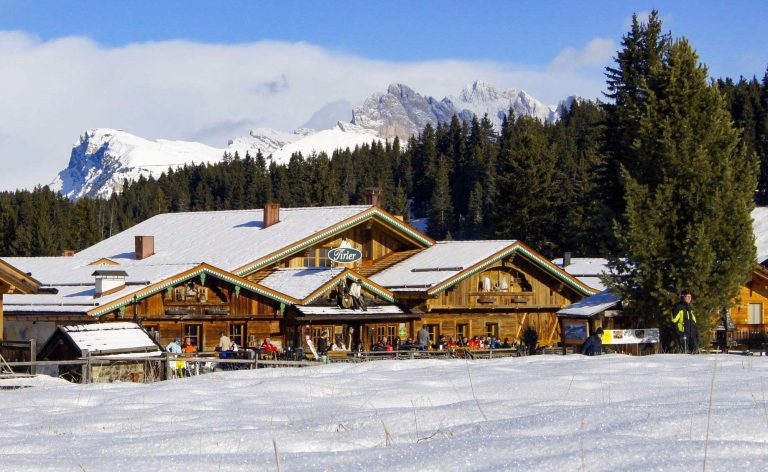
Those who prefer an alternative to skiing can explore the woods with snowshoes, have fun on the toboggan runs or experience an adventure with a snowcat tour. Après-skis are a must, with the Moritzino that animates the evenings at altitude, while night skiing allows you to ski at night on illuminated slopes.
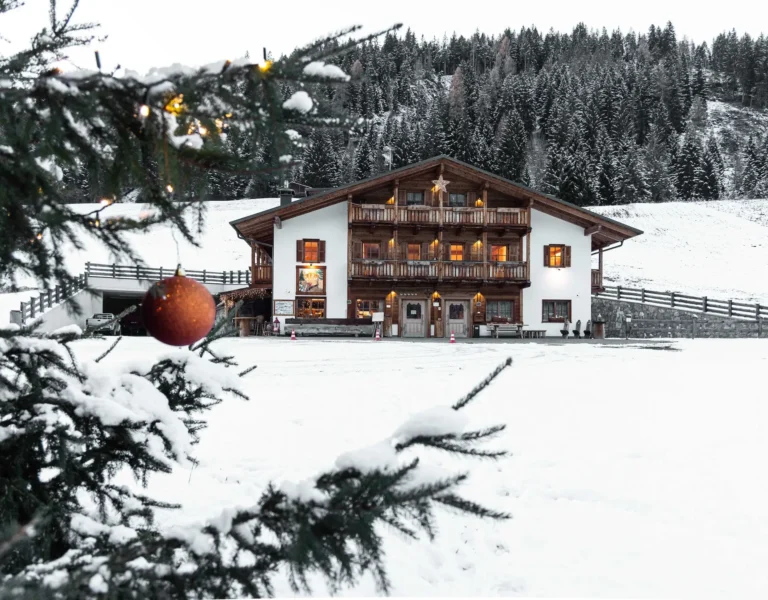
During the Christmas period, the Christmas markets make the atmosphere magical, and the parades of Krampus keep alive the ancient Ladin traditions. The Ice Club has an ice skating rink, and the picturesque Snow Cave is a fascinating stop for those looking for a unique experience. To end the day, Baita Ütia Florian is the ideal place to enjoy local specialties immersed in the quiet of the Dolomites.
In spring, the valley awakens with unique events and experiences. The Ski Carousel Vintage Party closes the ski season with fun descents in vintage clothes. Sports enthusiasts can go fishing in the Rio Gadera, while the communal swimming pool offers an alternative to relax.
The tradition is revived with the Uniun Bal Popolar, which organises shows of Ladin dances and music. In June, the Dolomites Bike Day allows cyclists to ride spectacular Dolomite passes without traffic, celebrating the beauty of spring in the mountains.